

Capsule Sizes: Complete Guide To Every Capsule Size
Pick the wrong capsule size and you'll either end up with a capsule so small it holds a fraction of your intended dose, or one so large it feels like swallowing a submarine. Most people choose a size based on what looks familiar at the pharmacy or on a random forum post. Neither is a great system. Capsule sizing has its own logic, and once you understand it, a lot of the guesswork disappears.


Check out our Blog
Please select a blog in the section settings.
What the Capsule Size Numbers Actually Mean
Capsule sizes are numbered in reverse. The larger the number, the smaller the capsule. A size 4 is tiny. A size 000 is the largest in the standard range. It is one of those pharmaceutical industry conventions that has never been updated for common sense, and it trips up first-time buyers more often than anything else about the capsule selection process. Understanding how pill capsule sizes are numbered is the first step; once the logic clicks, everything else about the selection process becomes easier.
The full standard range runs from 000 down to 5, with elongated "el" variants sitting between some of those steps. The elongated versions, like 00el and 0el, share the same diameter as their standard counterpart but have extra length, giving them more powder capacity without increasing how wide the capsule is. That extra room matters when you are working with a low-density powder and need to hit a specific dose without jumping to a size that is uncomfortable to swallow.
Here is what the size number cannot tell you: how much of your specific powder will fit inside. Capacity is not just about the capsule shell. It is about the bulk density of whatever you are filling it with. The same size 0 capsule will hold a completely different milligram amount of BCAAs versus a dense herbal extract versus a loose mushroom powder. The shell is constant. The fill weight is not. To get an accurate read on actual capacity for your ingredient, use the Blated Capsule Size Calculator instead of guessing from a generic chart.
Capsule Size Chart: Capacity By Powder Type
Capsule capacity is not a fixed number. It shifts based on what you are filling, the bulk density of your powder, and which size shell you are using. For a full visual reference covering capsule volumes, dimensions, and estimated capacity ranges across all standard sizes, refer to the Blated Capsule Size Chart. Below is a breakdown of how capacity plays out across the three most common powder categories:
Light And Fluffy Powders
Powders like greens blends, mushroom powders, and certain herbal powders are low density. They take up more physical space per milligram, which means a given capsule size will hold fewer milligrams of these ingredients than it would a denser powder. If your target dose is on the higher end, you will likely need a larger capsule size than you initially expect.
Dense And Compact Powders
BCAAs, creatine, and similar fine, heavy powders pack tightly into a capsule shell. More milligrams fit into a smaller space, so a mid-range capsule size often covers a standard dose without needing to size up. Dense powders are generally more forgiving when it comes to hitting a specific target weight per capsule.
Variable And Blended Powders
Custom blends and multi-ingredient formulas are the trickiest to size for because each ingredient brings its own density. The combined bulk density of your blend determines actual capsule capacity, and it is rarely predictable without measuring. For blended powders, the Blated Capsule Size Calculator works well for single ingredients, but the Capsule Formulation Tool is the better option. It is built specifically for multi-ingredient mixes, lets you set individual dosages per ingredient, and accounts for the combined density of your blend so your capsules hold exactly what you intend.
How To Choose The Right Capsule Size For Your Supplement
If you have ever asked yourself what size capsule you should use, it comes down to the math. Our guide on How to Pick the Best Capsule Size goes deeper into the full decision process. Your dose, your powder density, and your tolerance for large capsules all factor into the decision. Here is how to think through each piece before landing on a size:
Start With Your Target Dose
Before anything else, you need to know how many milligrams you are trying to fit into a single capsule. This is your anchor number. Everything else works around it. If your target dose is 500mg, you need a capsule that can physically hold 500mg of your specific powder. If it cannot, you either size up or split the dose across two capsules.
Factor In Your Powder's Bulk Density
Once you have your target dose, bulk density tells you which capsule size can actually deliver it. A light powder needs more physical space to reach the same milligram count as a dense one. This is where most sizing mistakes happen. People assume milligram capacity is universal across powders, and it is not. Use the Blated Capsule Size Calculator to find out how much of your powder fits into each size, and pair that with a digital scale to confirm actual fill weight after your first batch. Calculated estimates give you a starting point — the scale confirms you are hitting your intended dose.
Consider Swallowability
Capsule size is also a practical comfort question. Size 000 holds the most powder but is the largest capsule in the standard range. For most adults, sizes 0 and 00 sit in a reasonable middle ground between capacity and ease of swallowing. If you are filling capsules for someone with difficulty swallowing, sizing down and taking two capsules is usually the better approach.
Gelatin vs. Vegan Capsules: Does Size Work The Same Way?
Capsule material and capsule size are two separate decisions, but they are worth understanding together. A capsule size comparison across material types shows that size availability is largely consistent whether you are working with gelatin or pullulan, but the shell material affects dissolution time, ingredient compatibility, and what the capsule is actually made from. Here is how the two main material options compare across those factors:
Gelatin Capsules
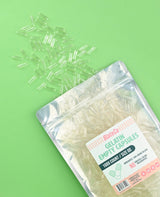
Gelatin capsules are made from a single ingredient: bovine gelatin. Blated sources only bovine gelatin capsules, with no porcine-derived options in the lineup. They have been the industry standard for decades, dissolve reliably in the stomach, and are widely available across all standard sizes. For most people filling capsules at home, gelatin is a straightforward, clean option as long as there are no dietary restrictions. Blated carries gelatin capsules in one naturally derived ingredient, with no added fillers or binders.
Pullulan Capsules
Pullulan is a naturally occurring material produced through the fermentation of tapioca starch, and is the only capsule option Blated recognizes as genuinely vegan-friendly. It carries no synthetic processing. Pullulan capsules are available in the same standard sizes as gelatin and perform comparably in most filling applications. For anyone avoiding animal products, pullulan is the clean, naturally sourced alternative.
A Note On HPMC Capsules
HPMC, or hydroxypropyl methylcellulose, is frequently marketed as a vegan capsule material. It is not naturally occurring. HPMC is a synthetically modified cellulose material, and many call it vegan, but Blated does not consider it a genuinely vegan option despite how it is commonly labeled in the industry. We do not consider it the cleanest vegan option. If vegan certification matters to you, pullulan is the more honest choice. Size availability is similar, but the sourcing is not.
How Capsule Size Affects Your Capsule Filling Machine
Not every capsule filling machine works with every capsule size, and not every machine handles all sizes equally well. Matching your capsule size to your filling setup is a practical step that saves a lot of frustration. Here is what to know across the three main considerations:
Capsule Size Compatibility
Capsule filling machines are built around specific size plates or trays. Most manual fillers accommodate the most common sizes like 0, 00, and 000, but not all machines cover the full standard range. Before settling on a capsule size, confirm that your machine has a corresponding tray for it. Blated's capsule filling machines are designed with this in mind and cover a wide range of standard sizes across their lineup.
Tray Capacity And Batch Size
The number of capsules you can fill per batch depends on your machine's tray size, not your capsule size. Blated's manual fillers come in 100, 400, and 800 hole configurations. Blated's manual fillers come in 100, 400, and 800-hole configurations to suit different batch sizes. One practical note on the 800-hole Pro Series: it is larger and heavier than the 100 and 400-hole models, so it is worth thinking through your workspace and setup before ordering. For higher volume needs, the Pro-Op 300 is a semi-automatic step up designed for anyone filling large batches regularly.
Loading Both Capsule Halves
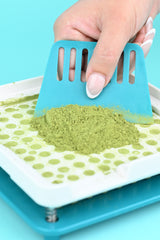
On all manual capsule filling machines, both halves of the capsule need to be loaded separately into their respective trays. The body goes into the bottom tray, where it will be filled with powder, and the cap sits in the top tray ready to close. Only the body is filled. The top tray is then pressed down to snap the caps onto the filled bodies. If the process feels slow, two practical solutions exist: the Quick Flip Trick, which speeds up the separation process, and pre-separated capsules, which come ready to load straight into the tray.
Common Capsule Sizing Mistakes And How To Avoid Them
Capsule sizing errors are more common than most people expect, and most are avoidable with a little preparation. Most mistakes come down to a few recurring patterns that show up whether someone is filling their first batch or their fiftieth. Here is where things tend to go wrong:
Choosing A Size Based On Appearance Alone
A capsule that looks about right is not the same as a capsule that is right. Many first-time fillers pick a size based on what they have seen in a store-bought supplement or what looked familiar online. Without accounting for your specific powder’s bulk density and target dose, appearance is not a reliable guide. Two capsules can look identical in size and hold meaningfully different amounts of your powder depending on what you are filling them with.
Using Generic Milligram Estimates
Capsule size charts that list a single milligram range per size are giving you an average, not a guarantee. Those numbers are based on an assumed density that may have nothing to do with your powder. Relying on them without verifying against your actual ingredient is one of the most consistent sources of underdosed or overdosed capsules. Our guide on how to Fill Capsules with Exact Dosages walks through how to get this right every time. The Blated Capsule Size Calculator exists specifically to solve this problem by accounting for your powder's actual density.
Ignoring The Elongated Size Options
Most people shop for the standard sizes and never consider the elongated variants. This is a missed opportunity, particularly for low-density powders, where hitting a target dose in a standard size means jumping to a noticeably larger capsule. An elongated size like 0el or 00el gives you more capacity at the same diameter, often resulting in the same swallowability with a better fit for your dose.
Frequently Asked Questions
Size 5 is the smallest in the standard capsule range. It is rarely used as a supplement because it contains very little powder, making it difficult to achieve a meaningful dose in a single capsule. It is more commonly found in pharmaceutical applications where precise, very small doses are needed.
Yes, though the process is different from filling dry powder. Liquid and oil fills require a syringe or dropper for accurate loading, and the capsule halves need to be sealed quickly after filling to prevent leaking. Capacity figures for liquid fills differ from powder fills, so do not rely on powder-based density charts for liquid applications.
The numbered sizing system is an industry standard, so a size 0 from one manufacturer should match a size 0 from another in terms of outer dimensions. However, minor variations in wall thickness and material can affect internal volume slightly. For practical purposes, the differences between reputable capsule manufacturers are negligible.
A general reference point: size 00 and larger tend to be where some people start noticing discomfort. If a size feels too large, splitting your dose across two smaller capsules is a practical solution that does not require changing your powder amount, just your capsule count per serving.
Capsule size itself does not directly affect absorption. What matters more is the capsule material and how quickly it dissolves in the stomach. A larger capsule dissolves no more slowly than a smaller one made from the same material. Absorption is driven by the ingredient and the shell material, not the physical dimensions of the capsule.
Smaller sizes like 3, 4, and 5 are sometimes used for pediatric or veterinary applications because of their compact dimensions. That said, capsule use for children or pets should always be guided by a healthcare or veterinary professional. Blated's capsule filling machines are trusted by veterinarians and clinics, though product use in those contexts is best handled with professional input.