If you've been searching "pill press" or "pill filler" trying to find a machine that fills capsules at home, you're not alone, and you're not wrong for searching that way. But there's an important distinction worth knowing. A pill is a tablet compressed and bound together using a tablet press. Most home users and small businesses are looking for a capsule filler, a device that fills two-piece shell capsules with powder. Same intent, very different machine.
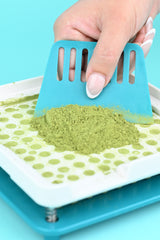
A capsule maker, or capsule filling machine, works by holding empty capsule shells in a tray, separating the two halves, filling the bodies with powder, and pressing them back together. No binding agents, no compression, no chemistry degree required. You load your powder, you fill your caps, and what goes inside is entirely your call.
That last part matters more than it sounds. The FDA's supplement labeling standards govern what manufacturers are required to disclose, and they leave more room for unlisted extras than most consumers realize. When you control the machine, you control the ingredients. No mystery fillers, no artificial flow agents, no cutting corners on the active ingredient to save on manufacturing costs. A capsule maker is really just a tool that puts you in charge of exactly what you're consuming, which is something the mainstream supplement industry has never been particularly eager to hand over.
How A Capsule Making Machine Works
Most people assume filling capsules at home is complicated, but the process is more straightforward than you might think. Our full explainer on How Does a Capsule Filling Machine Work? covers the mechanics in detail. Every manual capsule-filling machine follows the same basic sequence, with differences in scale and design. Here is how the process breaks down:
How To Load A Capsule Maker Machine
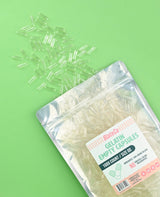
Empty capsules come in two halves: a longer body and a shorter cap. Both halves need to be loaded into the tray separately, which is standard across all manual machines. Blated offers pre-separated capsules to speed this step up, and the Quick Flip Trick covered in our guides makes the process significantly faster once you get the hang of it.
Filling And Tamping The Powder
Once the capsule bodies are loaded and separated, you spread your powder across the tray and use the tamping tool to pack it down. This is where powder density matters. How much fits into each capsule depends on the ingredient you're using, which is why Blated's capsule size chart and formulation tool exist to take the guesswork out of that calculation.
Closing The Capsules
After the bodies are filled, the cap tray is aligned on top and pressed down to snap everything shut. A clean, even press is what separates well-filled capsules from ones that come apart later. At this stage, you can weigh finished capsules to confirm the dosage, or determine your powder's density beforehand to predict capacity before you even start.
Home Capsule Maker vs. Capsule Machine For Small Business: Which Do You Need?
The right capsule filling machine comes down to one honest question: how many capsules are you actually making, and how often? Our guide on How to Choose a Capsule Filling Machine goes deeper into this decision. Volume and frequency are what separate a good home setup from one that can withstand consistent small-business demand. Here is how to think through each scenario:
Filling For Personal Use
If you are making capsules for yourself or your household, a 100-hole machine is a practical and affordable starting point. It handles a wide range of supplements like greens, BCAAs, and mushroom powders, and does not take up much counter space. For most home users, this is more than enough.
Scaling Up At Home Or For A Small Operation
A 400-hole machine is a natural step up for anyone making larger batches regularly. It suits hobbyists who have outgrown the 100-hole, as well as small operations just getting started. The jump in output is significant without a major jump in footprint or complexity.
Running A Serious Small Business Volume
For consistent high-volume production, the 800-hole machine is worth considering for small businesses with steady batch demands. It is worth noting that this model is larger and heavier than the 100 and 400-hole options, with all parts weighing approximately 25 pounds, so factoring in your workspace setup beforehand is a practical consideration.
The Blated Lineup: Core Series, Pro Series, And The Pro-Op 300
Now that you have a sense of which volume range fits your needs, the next step is understanding what separates one machine from another beyond hole count. Blated carries one of the largest selections of manual capsule filling machines in the United States, and each model in the lineup was designed with a specific user in mind. For a ranked comparison of options, see our 7 Best Capsule Filling Machines of 2026 guide. Here is a breakdown of what each option brings to the table:
Core Series
The Cap & Press™ is Blated's clean, reliable entry point for home users and small operations. What sets it apart from generic imported machines is a deliberate design choice: only clear and white components come into contact with your ingredients, minimizing exposure to dyes that are common in heavily colored machines from other brands. It is straightforward, well-built, and does exactly what it needs to do.
Pro Series
The Pro Series is built for users who fill capsules regularly and need a machine that holds up over time. It features tool-free disassembly via hand-removable bolts, stronger acrylic and stainless steel construction, and a more refined structural design than the Cap & Press™. This makes deep cleaning, adjusting, and replacing worn parts straightforward without needing any additional equipment. For a full side-by-side breakdown of both series, our Core vs. Pro Series Capsule Fillers guide covers every difference in detail.
Pro-Op 300
For anyone running serious volume, the Pro-Op 300 is where the conversation changes. It is a semi-automatic machine designed for users who have outgrown the pace of manual filling and need something built for repeated, high-output cycles. Where manual machines are the right tool for home use and small operations, the Pro-Op 300 is built for setups where volume is the priority and consistency across every batch is non-negotiable.
Capsule Size, Powder Density, And Getting Your Dosage Right
Picking the right capsule size is not just about what fits; it is about ensuring your finished capsules actually contain the intended dosage. Two ingredients can look identical as powders and fill a capsule completely differently based on their density. Here is what to understand before you start filling:
Capsule Size And Capacity
Capsule sizes are not standardized by milligrams; they vary depending on the density of whatever powder you are using. A size 00 capsule filled with a light, fluffy powder will hold a very different amount than one filled with a dense, heavy powder. Blated's capsule size chart at blated.com is the most reliable reference for this, and the calculator on that page lets you enter your specific powder values to get accurate results.
Understanding Powder Density
Density is the variable most people skip, and it is usually why their capsules end up underfilled or inconsistent. Knowing your powder's density beforehand lets you predict how much each capsule will hold before you commit to a full tray. Blated's Capsule Formulation Tool walks you through this calculation and flags any special mixing steps like geometric dilution when your formula calls for it.
Capsule Material Options
Blated offers single-ingredient empty capsules made from two naturally occurring materials: gelatin and pullulan. Gelatin is the standard option for most users, while pullulan is the preferred true vegan option. It is worth noting that HPMC, commonly marketed as vegan, is an artificially modified cellulose material and does not meet Blated's standard for naturally derived ingredients.
Why DIY Capsules Beat Store-Bought
Most people do not realize how little of what they pay for in a supplement actually goes toward the active ingredient. The rest covers branding, packaging, distribution markups, and a surprisingly long list of additives that exist to make manufacturing easier, not to make you healthier. Here is what changes when you take that process into your own hands:
You Control What Goes Inside
Store-bought supplements routinely include artificial colors, flavors, sweeteners, and fillers that no one would choose if given the option. The FDA's supplement labeling standards explain what manufacturers are and are not required to disclose, which underscores the importance of knowing your own ingredients. When you fill your own capsules, every ingredient in that shell is one you chose deliberately. Single-ingredient capsules, clean powder sources, and a machine designed to prevent dye contamination mean what you take is actually what you wanted.
The Cost Difference Is Hard To Ignore
Buying bulk powder and filling your own capsules is consistently cheaper per serving than buying pre-made supplements, often by a significant margin. You are paying for the powder itself, not the packaging, the branding, or someone else's margins. Over time, especially for anyone taking multiple supplements daily, the savings from a home capsule maker add up in a way that is difficult to justify ignoring.
Cleaner Ingredients, Clearer Mind
There is a real but underappreciated connection between artificial additives and how you feel day to day. The FDA's Current Good Manufacturing Practice regulations exist precisely because ingredient quality and consistency cannot be assumed. Knowing your own ingredients removes the need to rely on whether a manufacturer followed them. Simplifying what goes into your supplements removes a layer of variables that most people never think to question. When your ingredients are clean and your process is yours, supplementation stops being something you just hope is working and starts being something you actually understand.