



Key Takeaways:
- Purpose Over Marketing: Enteric coated capsules serve a legitimate function for acid-sensitive ingredients, but most everyday supplements don’t require them regardless of what the label implies.
- DIY Limitations Are Real: Replicating enteric coating at home requires equipment and conditions that most users don’t have access to, making alternatives a more practical and cost-effective choice.
- Simpler Options Exist: Single-ingredient capsules and Blate Papes® cover the needs of the vast majority of home supplement users without the added cost, complexity, or synthetic materials that enteric coating typically involves.
You've probably seen "enteric coated" on a supplement label and either paid extra for it or skipped past it entirely without knowing what you were choosing. Most people do one or the other. The problem is that neither choice is well thought out, and in supplementation, uninformed choices tend to cost you money, comfort, or both.
At Blated, we've spent years helping people take back control of what goes into their supplements. That includes everything from the capsules themselves to the machines used to fill them, and that hands-on experience gives us a grounded perspective on what matters when choosing how to take your supplements.
Here, we break down what enteric coated capsules are, how they work, who genuinely needs them, and what the DIY reality looks like for health enthusiasts.
What Enteric Coated Capsules Are And How The Coating Works
Enteric coated capsules have been used in pharmaceuticals for decades, but they've slowly made their way into the supplement space, too. Knowing what the coating does and why it exists helps you figure out whether it belongs in your routine at all.
The Coating Itself
Enteric coating is a protective layer applied to the outside of a capsule that resists dissolving in stomach acid. It's designed to stay intact through the low pH environment of the stomach and only begin breaking down once it reaches the higher-pH environment of the small intestine (Maderuelo et al., 2019).
Why Delayed Release Capsules Exist
Some ingredients degrade when exposed to stomach acid before they ever reach the point of absorption. This is the core problem these capsules were developed to solve, giving sensitive compounds a better chance of surviving the digestive process intact and arriving where the body can use them.
How Gastro Resistant Capsules Differ From Standard Ones
A standard capsule is broken down quickly in the stomach, releasing its contents into that acidic environment right away. These durable gastro resistant capsules are built from materials or treated with coatings that withstand that same acidity, releasing their contents further along the digestive tract. The stated advantage is protecting certain compounds from acidic pH and enzymatic breakdown in the stomach, and for some ingredients, research does show improvement in bioavailability when enteric coating is used (Maderuelo et al., 2019).
That said, the real-world picture is more complicated. Actual absorption levels can be influenced by a range of variables including gastrointestinal pH, transit time, and individual differences in how a person's digestive system processes the coating polymer itself. As Maderuelo et al. (2019) note, the genuine influence of enteric coating on bioavailability warrants ongoing scrutiny, and the relationship between coating and therapeutic effect is not as straightforward as supplement marketing often suggests.

Acid Resistant Capsules: Who Needs Them And Who Doesn't
Not every supplement needs to survive stomach acid to be effective, and that distinction matters more than most supplement labels let on. Paying a premium for specialized coating when your ingredients don’t require that protection is a common and avoidable mistake. Here’s a breakdown of who tends to benefit from enteric coated capsules.
When They're Worth It
Certain ingredients, like some probiotic strains and digestive enzymes, are sensitive to stomach acidity and may lose potency before reaching the intestine. For these compounds in particular, the added protection serves a true purpose that can affect whether the supplement does anything useful at all.
When A Standard Capsule Is Perfectly Fine
For most common supplements, such as greens, branched-chain amino acids (BCAAs), mushroom powders, and similar ingredients, standard capsules dissolve effectively and deliver contents without issue. In other words, the extra cost of enteric coating adds no measurable advantage for ingredients that are not acid-sensitive to begin with. If you’re still figuring out which capsule size and material make sense for your formulation, our guide on how to pick the best capsule size is a practical starting point.
The Marketing Problem
Enteric coating has become a selling point that sounds more scientific than it often is in practice. Brands usually use it to justify higher price tags on products where it provides no functional advantage, which is exactly the kind of supplement industry habit worth questioning before you buy.

Enteric Coating Capsules DIY: What's Realistic At Home
Home supplement making has come a long way, but there are still some things that don't translate cleanly from a manufacturing facility to a kitchen counter. Enteric coating is one of them, and it's worth being honest about why before you go down that road.
The Process Is More Involved Than It Sounds
Achieving a uniform enteric coating that’s safe to consume requires specialized coating solutions, precise pH testing, and controlled drying conditions that most home setups simply can’t achieve without spending a pretty penny. Without the right equipment and environment, replicating this process at home is genuinely difficult and often not worth the effort for most users. For the vast majority of people making their own supplements, the safer and more affordable path is to focus on what you can control. Our guide on how to make your own supplements covers that process from the ground up.
Smarter Alternatives Already Exist
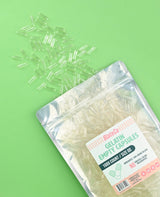
For the vast majority of home supplement users, standard single-ingredient capsules filled with a reliable capsule filling machine cover nearly every practical need without the added complexity of coating processes or synthetic materials. Pullulan is our preferred vegan capsule option, naturally derived through fermentation and free from the synthetic processing that makes Hydroxypropyl Methylcellulose (HPMC) a material we don’t recommend. We also offer fast-dissolving, pharmaceutical-grade gel caps made from pure kosher bovine gelatin for those without dietary restrictions.
If you're not sure how much of your specific powder fits into a given capsule size, our Common Herb and Supplement Powders DIY Dosage List is a community-driven reference with density and dosage data for a growing range of ingredients, useful for planning your capsule size before you buy anything. Ultimately, when the contents of your supplement don't require delayed release, a clean and transparent capsule is the more straightforward choice.
Blate Papes® As A Completely Taste-Free Alternative
For users who want to skip capsules entirely, Blate Papes® are a faster and easier way to take powdered supplements for most users. Long story short, these are edible gel film pouches made from a single naturally occurring ingredient, potato starch. There’s no coating involved, no sneaky additives, and nothing extra you didn’t sign up for in the ingredient list. Capsules remain the better choice when pre-measured, portable doses are the priority, but for quick, tasteless powder intake, Blate Papes® are worth knowing about. Better yet, every order of capsules comes with a free sample of Blate Papes®! If you have questions about any of our products, the Blated FAQ page covers the most common ones in one place.

Final Thoughts
Enteric coated capsules solve a real problem, but only for a specific group of people with unique needs. For most home supplement users, the coating adds cost and complexity without adding meaningful benefit. Knowing the difference is exactly the kind of information the supplement industry rarely volunteers.
At Blated, the approach has always been to give people the tools and knowledge to make smarter decisions about what goes into their bodies. That means being upfront about what you need, and equally upfront about what you don’t.
Frequently Asked Questions About Enteric Coated Capsules
Can enteric coated capsules cause any side effects?
Some individuals report digestive sensitivity when taking supplements with certain coating materials. As with any supplement, checking the full ingredient list before use is always worthwhile.
Are enteric coated capsules safe to open or split?
No, breaking or opening them defeats the entire purpose of the coating and exposes the contents to stomach acid prematurely.
Do enteric coated capsules take longer to work?
Yes, because they are designed to bypass the stomach entirely, the onset of absorption is slower compared to standard capsules.
Can children take enteric coated capsules?
This depends entirely on the specific supplement and the child's age, so consulting a pediatric healthcare provider beforehand is the appropriate step.
Do enteric coated capsules need to be stored differently?
Humidity and heat can compromise the coating over time. Storing them in an airtight container in a cool, dry place is generally recommended.
Are enteric coated capsules relevant for people with acid reflux?
Some people with acid-sensitive digestive concerns use enteric coated capsules, but whether they are appropriate for any specific condition should be confirmed with a healthcare provider.
Is enteric coating the same as a time-release formula?
Not exactly. Enteric coating controls where a capsule dissolves, while time-release formulas are designed to slow how gradually ingredients are absorbed over time.
Sources:
- Maderuelo, C., Lanao, J. M., & Zarzuelo, A. (2019). Enteric coating of oral solid dosage forms as a tool to improve drug bioavailability. European journal of pharmaceutical sciences : official journal of the European Federation for Pharmaceutical Sciences, 138, 105019. https://doi.org/10.1016/j.ejps.2019.105019

